Practice-based research: from reflective practice to publication
Speaker
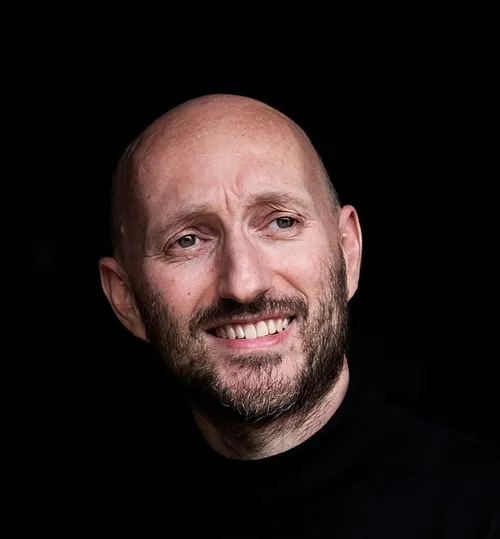
Samuel Bianchini est artiste et enseignant-chercheur (habilité à diriger des recherches) à l'École nationale supérieure des Arts Décoratifs (EnsAD) - Université Paris Sciences et Lettres (PSL), où il dirige le groupe de recherche Reflective Interaction d'EnsadLab (laboratoire de l'EnsAD).
Il vit et travaille à Paris. Avec plus de 100 expositions collectives et 20 expositions personnelles, ses œuvres sont régulièrement exposées en Europe et à travers le monde. Pour ses travaux de recherche-création il collabore avec des scientifiques de toutes disciplines et des laboratoires de recherche en ingénierie : Institut FEMTO-ST (Franche-Comté Électronique Mécanique Thermique et Optique – Sciences et Technologies), CEA (Commissariat à l'énergie atomique et aux énergies alternatives, Saclay), ISIR (Institut des Systèmes Intelligents et de Robotique, Sorbonne Université-CNRS), etc.
En relation étroite avec sa pratique artistique, Samuel Bianchini a entrepris un travail théorique qui donne lieu à de fréquentes publications. Il a publié plus de 70 textes et 7 livres dont, l'un des premiers ouvrages sur la recherche-création : Recherche & Création. Art, technologie, pédagogie, innovation, Montrouge, Éd. Burozoïque et École nationale supérieure d'art de Nancy, 2009 ; repris en format électronique en janvier 2012, par Art Book Magazine [www.artbookmagazine.com]. Il a également fondé la revue internationale visuelle multi-supports .able éditée par Actar (Barcelone, New York) et lancée en mars 2023.
Today, practice-based research is booming, to the point that it is even crossing the boundaries of arts and applied arts. But how can it be developed in the academic field, while ensuring its artistic quality and professional recognition, first and foremost in the art and design world? It must enable the creation of relevant works while producing new knowledge that could not have emerged otherwise. Based on practice, by and for practice, this research is built as much through reflexivity as through a desire to share, not only the results, but above all the means implemented: the artistic “instrumentarium” thus experimented and developed. This approach, which could be described as “organological” or even “organogenetic”, is undoubtedly one of the foundations of practice-based research conducted at EnsadLab, most often in a multidisciplinary dynamic involving experimental sciences and engineering sciences. The privileged place given to the means experimented and implemented, to techniques, as an art of doing, implies methodological and organizational forms allowing a relevant balance between collective dynamics and the commitment of individual authority.
If it is thus possible to lay the foundations of artistic research, it is also necessary to ask how to evaluate and share it in order to build communities of practice and, beyond that, to reach audiences. How to publish such research?
“Publish or perish!” is the adage in the world of academic research. But “publishing” is first and foremost about making public. If writing may pose problems for artists, they have, unlike scientists, powerful “mediums” to make their work known: exhibitions, live performances, design objects, distribution of media productions, etc. Academic publication is mainly envisaged in the form of writings - often illustrated - in specialized journals. Between these academic forms of publication and artistic encounters with the public, is it possible to open new paths that meet both academic and artistic requirements? Could these hybrid forms of publication, drawing as much on sensory experience as on the transmission of knowledge, allow addressing both experts and a much wider audience? Moreover, could these new formats contribute to mobilizing and involving their audiences?
To try to provide concrete answers to these questions, it seems relevant and productive to explore alternative paths, by hybridizing academic formats and artistic forms.
To present this organological approach to practice-based research and this process of publication, Samuel Bianchini will draw on numerous examples from the last ten years, before briefly presenting the new journal .able which is part of this renewal of publication modes based on practice-based research.