Design and appropriation













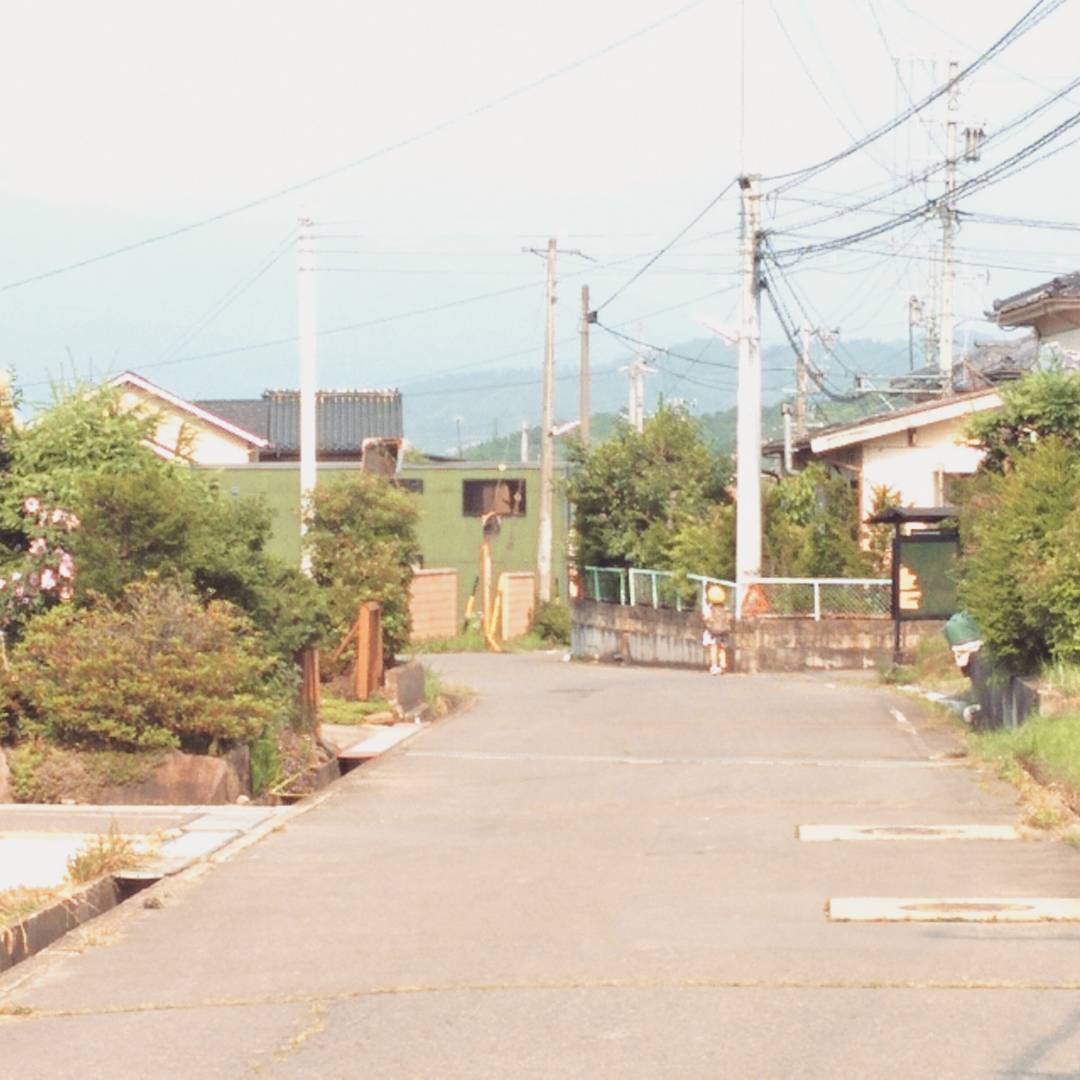



The question of the everyday is remarkable, given that the subject of the everyday is very little and often rather poorly treated in design. The term “everyday” is widely used in the design literature (e.g., (Hallnäs & Redström, 2002; Norman, 2013; Saito, 2007; Wakkary & Maestri, 2007)), but the notion itself is very little addressed. To illustrate this, one need only point to the simple omission of a description of this notion in the classic work Design of Everyday Things by Don Norman (2013) or in Everyday Aesthetics by Yuriko Saito (2007). Using these examples, I initiated a discussion on the PhD-Design mailing list (P. Levy, personal communication, April 4, 2017) calling on the design research community to determine possible directions for clarifying the concept of the everyday. This discussion both confirmed the fuzziness surrounding the notion of the everyday in design, and identified directions for such clarification, some of which we will draw on subsequently. But beyond these two points, it also contained a remark that caught my attention. An emeritus researcher indicated that while he had sought to understand how design interrogates the everyday, he had at the same time given up trying to define it. For him, this term is part of a set of terms so constitutive of design that it varies with the perspective taken on design. Defining the everyday would require defining design.
I disagree with this. Certainly, attempting to define design is a task that has always proven unsatisfactory, and is a priori problematic. But these attempts are also in themselves a strength for the discipline, as the plurality of perspectives has proven useful for the continuous questioning of the discipline, its evolution, and above all the consideration of its own complexity. It has also contributed to fostering serious and constructive exchange with related disciplines. Redström (2017) even suggests that “the presence of different definitions is instrumental as we try to understand and articulate what things such as design and designer are; the absence of this unified definition is not a conceptual void in our thinking but actually an effective strategy for overcoming certain types of complexity.” Like design, studying the everyday and attempting to formulate a description of it is not aimed at freezing the notion through a formulation one would hope to be salvific. On the contrary, its primary ambition is an exploration, that is to say a journey whose destination is unknown and in fact secondary. Exploring the everyday through design is above all an attempt to create a perspective on our lives and our experiences, on the banal, and on design. It invites developing an approach through which design can transform the everyday, recapturing its deep beauty without distorting it. Studying everyday life in order to transform it, in order to enchant it.
This research axis therefore seeks to open up the territory of the everyday and its values, the territory of our lives in what they have most real, far from those experiences we are told are extraordinary because they are in fact unattainable, and which one can only dream of. My proposal is to focus on what is there, every day, and very often forgotten or ignored in our lives and in design (Pérec speaks of anaesthesia). Being interested in design for the everyday means searching in the banal, in the common, in the endotic for what is beautiful or what can become so.
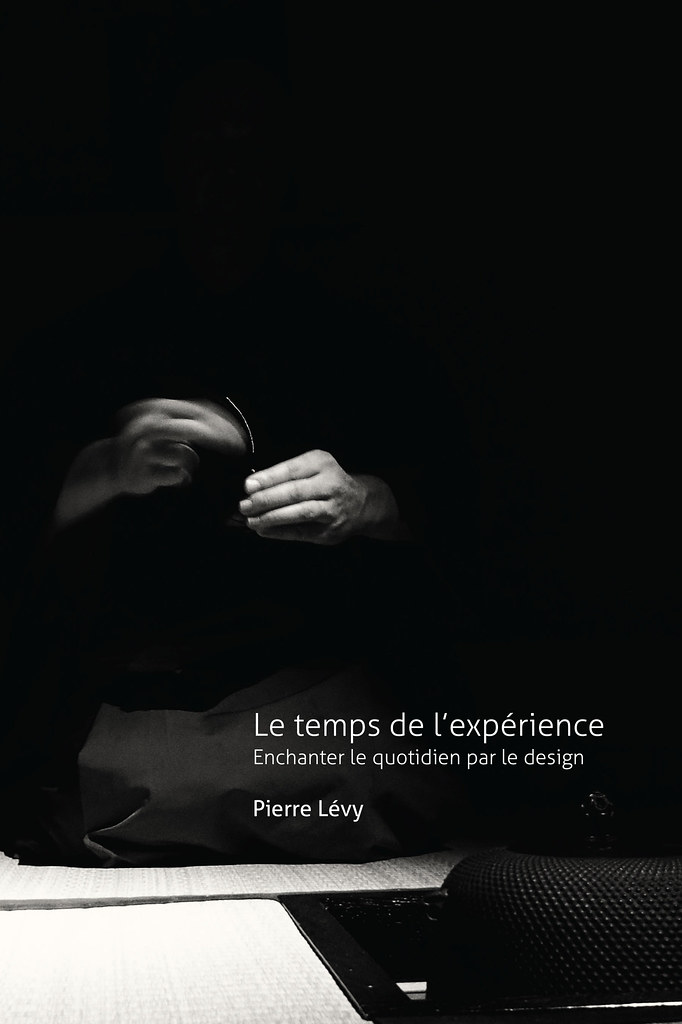
The time of experience, enchanting the everyday through design
The Japanese tea ceremony is a moment of aesthetic and ethical experience of the everyday, a harmony between objects, beings, places and practices. It reminds us that everyday objects, at the heart of our material culture, are of profound beauty and bear an admirable ethics, yet most often go unnoticed. At the crossroads of a reflection on a “Japanese” approach in design through the study of kansei, and a reflection on design in HCI driven by embodiment theories, this research first questions the Western cultural hegemony of design in HCI, and then establishes a cultural decentering of the discipline by taking Japanese philosophy and culture as theory. The result is a new perspective on design, both in reception and production, driven by an ethics of relation, an experience of suchness, and an aesthetics of irregularity. This perspective invites design to enchant the everyday, proposing to consider the details of reality as it is lived, and to create moments of the unexpected, sources of astonishment and new possibilities. Thus inviting a cultural decentering of design, this research proposes an original approach for a design of the everyday, and contributes to seeing in it a major aesthetic and ethical source, for the development of being, its sensitivity, and its values.
Publications
- Levy, P. (2020). Artefactual emptiness - On appropriation in kansei design. In the Proceedings of Kansei Engineering and Emotion Research International Conference 2020 - KEER2020 (online). Tokyo, Japan: Japanese Society of Kansei Engineering.
- Levy, P. (2019). Designing for the everyday through thusness and irregularity. In the Proceedings of 8th International Congress of International Association of Societies of Design Research, IASDR 2019 (online). Manchester, UK: Manchester Metropolitan University.
- Levy, P. (2018). The beauty of making hot chocolate – an inquiry on designing for everyday rituals. In Design Research Society 2018, DRS2018 (online). Limerick, Ireland: Design Research Society. https://doi.org/10.21606/drs.2018.514
- Levy, P. & Yamada, S. (2017). 3D-modeling and 3D-printing explorations on Japanese tea ceremony utensils. In the Proceedings of the 11th International Conference on Tangible, Embedded and Embodied Interactions - TEI17 Yokohama, Japan: ACM. https://doi.org/10.1145/3024969.3024990
- Levy, P. & Hengeveld, B.J. (2016). What matters for ritual visualization – Towards a design tool for the description and the composition of rituals. In the Proceedings of Kansei Engineering and Emotion Research International Conference 2016 - KEER2016 (online). Leeds, UK: Japanese Society of Kansei Engineering.
- Levy, P. (2015). Exploring the challenge of designing rituals. In V., Popovic, A., Blackler & B., Kraal (Eds.), the Proceedings of 6th International Congress of International Association of Societies of Design Research, IASDR 2015 (online). Brisbane, Australia: Queensland University of Technology.
- Levy, P. & Wakabayashi, N. (2008). User's appreciation of engagement in service design: The case of food service design. In the Proceedings of International Service Innovation Design Conference 2008 - ISIDC08 ([on CD]). Busan, Korea: Japanese Society for the Science of Design.